Avoiding Common Core Training Mistakes: Evidence-Based Techniques for a Rock-Solid Midsection
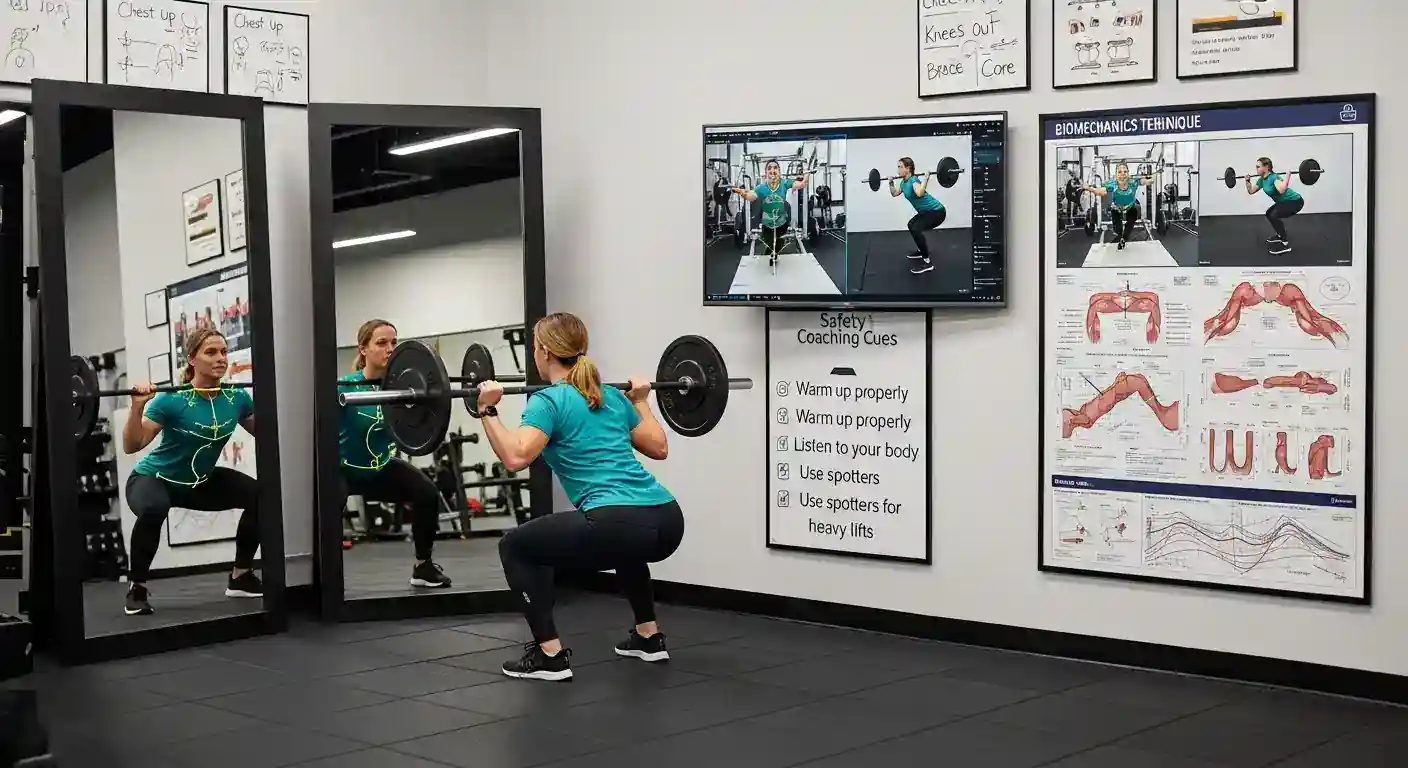
A strong core is the bedrock of a healthy, functional body, supporting everything from daily movements to peak athletic performance. However, many individuals unknowingly fall into common core training mistakes that hinder progress, lead to imbalances, and even increase the risk of injury. This guide will walk you through avoiding common core training mistakes by focusing on evidence-based techniques for a rock-solid midsection. We'll delve into understanding the true role of your core, debunk popular misconceptions, and equip you with practical, effective strategies to optimize your core workouts. Get ready to transform your approach to core strength and unlock a new level of physical resilience.
Key Points
- Holistic Core View: Move beyond just "six-pack" muscles to encompass all stabilizing muscles.
- Spinal Health Priority: Emphasize maintaining a neutral spine throughout exercises.
- Functional Movement: Train your core for real-world stability and power.
- Progressive Challenge: Consistently increase demand to stimulate growth and strength.
- Breathwork Integration: Utilize proper breathing for enhanced core activation and intra-abdominal pressure.
Understanding Common Core Training Mistakes and Why They Persist
The pursuit of a strong, defined midsection often leads people down paths paved with good intentions but flawed execution. Avoiding common core training mistakes begins with recognizing what these errors are and why they're so prevalent. Many traditional core exercises, while popular, often miss the mark when it comes to developing a truly functional and resilient core.
Focusing Only on "Six-Pack" Muscles
One of the most widespread misconceptions is that core training primarily targets the rectus abdominis, the muscle responsible for the "six-pack" aesthetic. While visible, this muscle is just one component of a complex system. Neglecting deeper muscles like the transverse abdominis, obliques, pelvic floor, and multifidus can lead to an imbalanced core. This imbalance diminishes overall stability and may even contribute to lower back pain. A truly strong core functions as a comprehensive unit, providing stability and transferring force throughout the body.
Neglecting Spinal Stability and Neutral Spine
Many core exercises are performed with excessive spinal flexion or extension, particularly in the lumbar (lower) spine. This can place undue stress on the spinal discs and ligaments, potentially leading to injury over time. Proper form dictates maintaining a neutral spine during most core movements. This means keeping the natural curvature of your spine, neither excessively rounded nor arched. Prioritizing spinal stability ensures that your core muscles are working to protect your spine, rather than compromising it.
Over-Reliance on Crunches and Sit-ups
Crunches and sit-ups have their place, but an over-reliance on these single-plane movements can limit comprehensive core development. They primarily train spinal flexion, often neglecting the crucial anti-extension, anti-rotation, and anti-lateral flexion functions of the core. Furthermore, when performed incorrectly, they can put significant strain on the neck and lower back. Expanding your exercise repertoire beyond these staples is vital for a truly strong and functional midsection.
Ignoring Progressive Overload and Variation
Just like any other muscle group, the core needs progressive overload to continue adapting and getting stronger. Many individuals perform the same core routine for months or even years without increasing difficulty. This stagnation limits progress. To achieve a rock-solid midsection, you must gradually challenge your core muscles more over time, whether through increased resistance, longer duration, more complex movements, or reduced stability.
Improper Breathing Mechanics
Perhaps one of the most overlooked yet critical mistakes in core training is improper breathing. Many people either hold their breath or breathe shallowly, failing to engage their diaphragm and create adequate intra-abdominal pressure (IAP). IAP is essential for spinal stability during heavy lifts and challenging core movements. Without proper diaphragmatic breathing, the deeper core muscles cannot activate effectively, compromising both performance and injury prevention. A truly evidence-based core training approach integrates mindful breathing as a foundational element.
Evidence-Based Techniques for a Rock-Solid Midsection
Moving beyond these common pitfalls, let's explore evidence-based techniques that will build a resilient and powerful core. These strategies are backed by scientific understanding of biomechanics and muscle function, ensuring your efforts yield optimal results.
Prioritizing Functional Core Strength and Stability
The core's primary role isn't just to move the torso, but to resist movement and stabilize the spine during various activities. Focus on exercises that challenge the core's ability to resist external forces. This includes:
- Anti-Extension: Resisting the urge for your lower back to arch (e.g., planks, dead bugs).
- Anti-Rotation: Resisting twisting of the torso (e.g., Pallof press, cable chops).
- Anti-Lateral Flexion: Resisting side-bending (e.g., suitcase carries, side planks).
These movements engage the core synergistically, mimicking how it functions in daily life and sports. For comprehensive fitness planning fundamentals, understanding these movement patterns is crucial. You can find more details on integrating these into a full regimen by exploring resources on /categories/fitness-planning-fundamentals.
Mastering Foundational Core Exercises with Proper Form
Before progressing to advanced movements, ensure you have a solid grasp of fundamental exercises and impeccable form. Precision over quantity is key.
- Plank Variations: Start with a basic forearm plank, focusing on a straight line from head to heels, bracing your core as if preparing for a punch. Progress to side planks, planks with arm/leg lifts, or weighted planks.
- Dead Bug: Lie on your back, knees bent, feet flat. Extend opposite arm and leg simultaneously while keeping your lower back pressed into the floor. This anti-extension exercise is incredibly effective for activating the deep core stabilizers.
- Bird-Dog: On hands and knees, extend opposite arm and leg while maintaining a neutral spine. Focus on stability and avoiding any rotation or arching in the lower back.
- Pallof Press: A fantastic anti-rotation exercise. Using a cable machine or resistance band, press the handle straight out from your chest, resisting the rotational pull of the weight.
Emphasis on controlled movement and mind-muscle connection will enhance the effectiveness of these exercises significantly. Don't just go through the motions; actively feel your core working.
Implementing Progressive Overload for Continuous Gains
To ensure your core continues to grow stronger and more resilient, you must systematically increase the challenge. This principle of progressive overload is fundamental to any effective strength training program.
- Increase Duration/Reps: Hold planks longer, perform more repetitions for dynamic movements.
- Increase Resistance: Add weight to exercises (e.g., weighted planks, carries).
- Decrease Stability: Perform exercises on unstable surfaces (e.g., BOSU ball) cautiously, or reduce points of contact (e.g., single-arm planks).
- Increase Leverage: Extend limbs further from your center of gravity.
- Reduce Rest Time: Shorten the breaks between sets to increase overall density.
For insights into optimizing your strength training program for long-term results, consider reviewing /articles/optimizing-your-strength-training-program-for-long-term-results. This helps ensure a balanced and effective approach to muscle development.
Integrating Breathwork for Enhanced Core Activation
As highlighted earlier, proper breathing is a critical yet often overlooked component of core strength. Research published in the Journal of Strength and Conditioning Research (2024) emphasizes the role of diaphragmatic breathing in improving core stability and intra-abdominal pressure.
- Diaphragmatic Breathing: Practice breathing deeply into your belly, allowing your diaphragm to descend, which naturally engages your transverse abdominis and pelvic floor.
- Bracing: Before performing a strenuous lift or challenging core exercise, take a deep diaphragmatic breath and then gently brace your core. Imagine someone is about to punch you in the stomach – you're tensing the muscles without sucking in your belly (hollowing) or pushing it out excessively. This creates IAP, acting as a natural weightlifting belt, protecting your spine.
- Controlled Exhalation: During the eccentric (lowering) or challenging phase of an exercise, exhale slowly and deliberately, maintaining core tension.
This conscious integration of breathwork will not only enhance your core's performance but also contribute to better spinal health and overall functional movement.
Designing Your Optimal Core Training Program
Building a rock-solid midsection requires a thoughtful approach to program design. It's not about endless reps, but smart, strategic integration.
Frequency, Volume, and Intensity Considerations
For most individuals, training the core 2-3 times per week is sufficient, allowing for adequate recovery.
- Volume: Aim for 2-4 exercises per session, performing 2-4 sets of 10-15 repetitions (for dynamic movements) or 30-60 second holds (for isometric exercises).
- Intensity: Your core exercises should feel challenging, but never at the expense of proper form. If you can't maintain perfect form, reduce the difficulty.
Incorporating Core Work into a Full-Body Routine
Core work doesn't always need to be a separate, lengthy session. It can be integrated efficiently:
- Warm-up: Include gentle core activation exercises like bird-dogs or cat-cow to prepare your body.
- Between Sets: For compound exercises, throw in a quick plank or dead bug to maintain core engagement.
- Dedicated Sessions: If you have specific core strength goals, a short 10-15 minute dedicated core session 2-3 times a week can be highly effective.
Remember, the goal is consistent, quality engagement, not just accumulating exercise time. A meta-analysis published in the British Journal of Sports Medicine (2023) highlighted the superior long-term benefits of integrated, consistent core training over sporadic, high-volume sessions. For overall workout efficiency, you might also find value in /articles/the-importance-of-proper-warm-ups-and-cool-downs-in-your-fitness-routine.
FAQ Section
Q1: How often should I train my core?
A: For most individuals, training your core 2-3 times per week is ideal. This allows sufficient time for muscle recovery and adaptation, which are crucial for strength development. While your core is involved in many movements, direct training sessions provide the targeted stimulus needed to build a rock-solid midsection. Listen to your body and adjust frequency based on recovery.
Q2: Can I get a six-pack just by doing core exercises?
A: While core exercises strengthen and develop the abdominal muscles, achieving a visible "six-pack" largely depends on having a low body fat percentage. Your rectus abdominis muscles will become stronger and more defined with proper training, but if they are covered by a layer of fat, they won't be visible. A balanced diet and overall calorie deficit are essential for fat loss.
Q3: What's the difference between bracing and hollowing?
A: Bracing involves tensing all the abdominal muscles, creating a solid, stable cylinder around your spine, similar to preparing for a punch. This increases intra-abdominal pressure, which is crucial for spinal stability, especially during heavy lifts. Hollowing, on the other hand, involves drawing your belly button towards your spine, primarily engaging the transverse abdominis. While hollowing can be useful for rehabilitation, bracing is generally preferred for functional strength and protecting the spine during dynamic movements.
Q4: Are weighted core exercises safe?
A: Yes, weighted core exercises can be very safe and effective for building strength, provided they are performed with correct form and proper progression. Just like any other strength exercise, starting with light weights and gradually increasing the load while maintaining a neutral spine and controlled movement is key. Weighted carries, Pallof presses, and landmine twists are excellent examples that safely challenge the core with external resistance.
Takeaway: Build Your Rock-Solid Midsection with Confidence
By consciously avoiding common core training mistakes and embracing evidence-based techniques, you're setting yourself up for true, lasting core strength. Remember, your core is far more than just your abs; it's the central pillar of your physical capability, influencing posture, movement efficiency, and injury resilience.
Start today by integrating proper breathing, prioritizing functional movements, and focusing on quality over quantity. Be patient, consistent, and always prioritize good form. A stronger, more stable midsection is within your reach.
Ready to transform your core? Share your biggest core training challenge in the comments below!
Further Reading Suggestions:
- Understanding Core Anatomy: Delve deeper into the specific functions of each core muscle.
- Core Training for Athletes: Explore advanced core techniques tailored for sports performance.
- Mind-Muscle Connection in Core Training: Learn how to maximize engagement for better results.